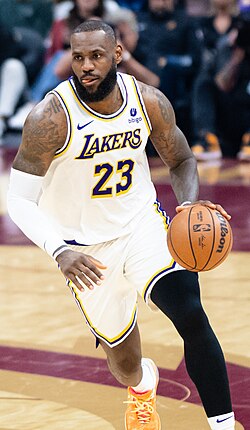
The debate between Michael Jordan and LeBron James is a never ending conversation in basketball. While accolades, longevity, and personal preference all fuel the argument, advanced metrics like RealVPM (Real Value Per Minute) offer a data-driven look at their actual on-court statistical impact — especially in the playoffs, where every possession can tilt a championship.
RealVPM measures the total statistical value a player produces per minute, factoring in scoring, rebounding, assists, defensive actions, and penalising missed shots, turnovers, and fouls — each stat weighted by league averages. This comprehensive stat does it’s best to seperate the narratives from the actual impact.
Offensive RealVPM: Jordan’s Unmatched Scoring Value
Michael Jordan’s Offensive RealVPM of 115.2 significantly outpaces LeBron James’ 86.9, reflecting just how dominant Jordan was offensively in postseason play. Across 179 playoff games, he averaged 33.4 points per game on 49% shooting, 33% from three, and 83% at the free-throw line. Jordan added 5.7 assists and an impressive 1.7 offensive rebounds per game — extraordinary for a shooting guard.
In fact, that offensive rebounding number exceeds LeBron’s 1.5 offensive boards per game, despite LeBron playing mostly as a forward. Jordan’s knack for second-chance points as a guard speaks to his aggressiveness, anticipation, and relentless energy — qualities that directly add to his offensive RealVPM.
LeBron, while highly efficient at 50% FG and also averaging 7.2 assists, is hampered by weaker free-throw shooting (74%), higher turnovers (3.6 per game), and a lower per-minute scoring rate. His offensive game may be broader, but Jordan’s was sharper, more focused, and more efficient, leading to a clearly higher offensive RealVPM.
Defensive RealVPM: Rebounding vs. Responsibility
LeBron edges Jordan in Defensive RealVPM — 61.1 to 51.1, primarily due to his 9 rebounds per game, including strong defensive rebounding. He also averaged 1.7 steals and 1 block, numbers that contribute to his statistical defensive presence.
However, context matters. Jordan, a 6’6” shooting guard, averaged 6.4 rebounds, 2.1 steals, and 0.9 blocks — remarkable for his size and position, especially considering the more physical and traditional matchups of the 80s and 90s. Jordan played in an era where true bigs ruled the paint, and point guards initiated nearly every play. He guarded his position in a structured, physically demanding defensive system — and often took on the challenge of locking down the opponent’s best perimeter player.
By contrast, while LeBron has occasionally guarded multiple positions, especially early in his career, most of his playoff defense has come as a help-side or switch defender, not as a consistent lockdown force. His numbers are strong, but they benefit from modern defensive schemes and increased opportunities for rebounds in a spaced-out, faster game.
Overall RealVPM: Jordan’s Peak Impact
Adding both sides of the ball, Jordan’s Overall RealVPM of 166 clearly exceeds LeBron’s 148. That gap reflects not just scoring and defense, but also lower turnover rates, better free-throw shooting, and higher value per possession — all in fewer playoff minutes.
Jordan’s playoff record: 119–60 with six championships in six Finals appearances. He never lost a series as the higher seed. LeBron’s record: 184–108, with four titles in ten Finals trips, but six Finals losses — including multiple defeats when favored.
Competition Level: Myths vs. Reality
A popular talking point in LeBron’s favor is that he faced “tougher competition.” But the data tells a different story.
Jordan’s playoff opponents had a combined win percentage of 65.2%, compared to LeBron’s opponents’ 62.4%. This is a significant difference. Jordan regularly battled 50+ win teams and overcame elite Eastern Conference rivals like the Bad Boy Pistons and Ewing-led Knicks before even reaching the Finals.
This contrast undercuts the argument that LeBron’s path was harder. In truth, Jordan defeated stronger teams more consistently and did so without leaving to greener pastures or forming superteams.
Team Loyalty and Context
LeBron’s career has seen him shift teams in search of better supporting casts — to Miami with Wade and Bosh, back to a retooled Cleveland with Kevin Love, and later to the Lakers with Anthony Davis. His adaptability and leadership are admirable, but they came with superstar reinforcements at every stop.
Jordan, by contrast, stayed in Chicago his entire prime. He won all six titles with one perennial All-Star teammate in Scottie Pippen, and without ever losing a Finals series. He didn’t jump ship when the roster weakened — instead, he elevated those around him and turned a single franchise into a dynasty.
Both players are transcendent. But when we remove bias and examine RealVPM — a true measure of playoff efficiency and value per minute — Michael Jordan stands apart.
He produced more combined offensive and defensive impact per minute, did it against stronger opponents, stayed loyal to one team, and delivered near-flawless Finals performances without the benefit of modern superteams. His numbers were positionally elite, and in many areas — like offensive rebounding — even exceeded what you’d expect from a guard.
Final Verdict: RealVPM Seals the Case
LeBron’s longevity, versatility, and overall résumé are second to none. But in the postseason — when games slow down and margins tighten — Jordan’s greatness wasn’t just iconic, it was measurably superior.
RealVPM doesn’t just settle arguments — it confirms what the eye test and the rings already suggested: Michael Jordan is the greater playoff performer of these two giants of the sport.